Research & Mathematical Guides
Objective financial breakdowns, lease agreement clauses, state tax rules, and money factor calculations to eliminate dealer opacity before signing your next vehicle contract.

0% APR vs Cash Back: Which Is Better for Leasing a New Car?
When comparing low interest vs cash back, buyers often face a real dilemma. Both incentives can deliver substantial savings, but they work in different ways: rebates reduce the vehicle’s capitalized cost, while special financing helps you avoid interest charges. Whether cash back or 0% APR is better for you depends on the size of the rebate, the offered APR, and your credit score.
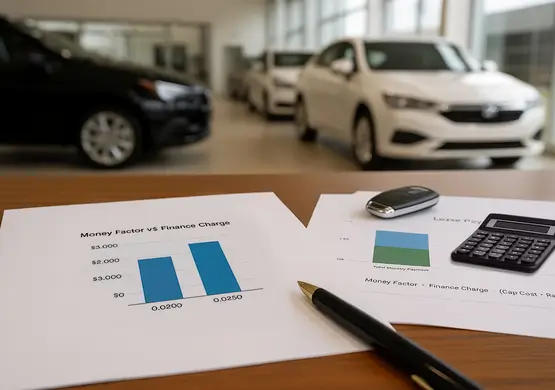
What Is Money Factor on a Lease and How to it Affects the Deal: Explanation, Conversion and Comparison
The money factor determines the cost of the lease price and financing of the car (in which case the term is known as APR). Therefore, it is always used in transaction terminology. The lower the value, the lower your costs will be. However, to have a good money factor you will have to have a high credit rating and be able to negotiate with the dealer.

How to Negotiate the Best Car Lease Deal: 10 Steps to Take with the Dealer
Those who want to save extra money on auto leasing should consider negotiating with the dealer. The buyout price, gross capitalized value, mileage discount and money factor should all be negotiated. Another valuable tip to help you negotiate the best price on a car lease is to research special offers from several dealers.

Should You Lease a Car with $0 Down? Revealing the reality of the offer
Zero down payment leasing is often advertised as an easy way to purchase a new car without paying thousands of dollars up front. But what “$0 down” actually means is that you won't be required to make a down payment on the lease, which reduces the marginal cost of the vehicle. In many cases, this will be an advantage, but it may not be an affordable offer for everyone.
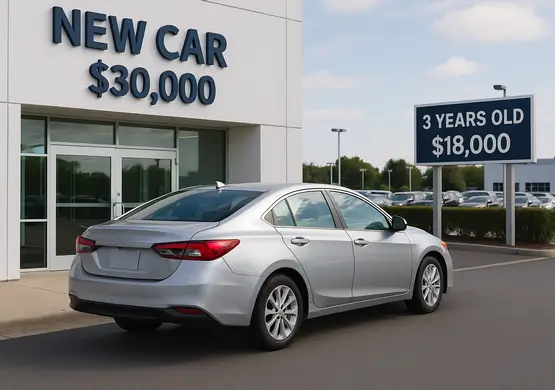
Car Depreciation Guide: Formula, Calculate, Examples, Rates & Tips
Car depreciation is the loss of value due to wear and tear or regular use. When you lease a vehicle, you're essentially paying for that depreciation, along with interest and taxes. This invisible factor plays a major role in determining your monthly lease payments. Understanding how to calculate depreciation, how fast it occurs, and how to reduce it can help you make a smarter decision when choosing a vehicle and deciding how to own it.

What Is Residual Value? Definition, Importance, Who Determines It, How It's Calculated, and Real-World Examples
Residual value represents the expected price of a car at the end of the lease term. The higher it is, the lower your base payments will be. Experts calculate this value using a specific formula, and financial companies rely on it when determining lease payments.
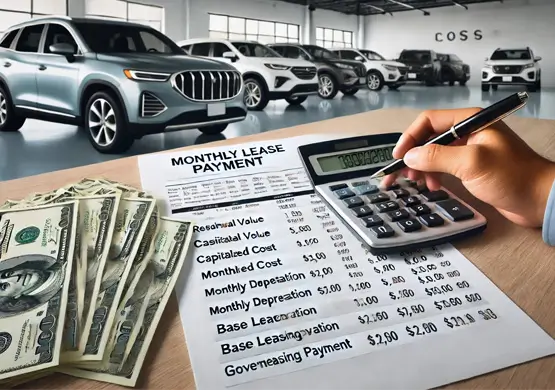
How to Calculate Your Monthly Car Lease Payment
Learn how to calculate your monthly car lease payment by understanding its five key components. Use formulas to estimate leasing costs and compare it to buying or financing a vehicle
Want to know which product fits your lifestyle?
Our 6-axis Decision Engine evaluates your driving habits, life stability, ownership mindset, and risk comfort in under 2 minutes.